Learn Arabic for Quran is not just about acquiring a language, it’s about unlocking the depth, wisdom, and beauty of the words of Allah. For every Muslim who wishes to connect deeply with the Quran, understanding Arabic is a vital tool. This blog will explore why learning Arabic is essential, especially for those studying or teaching the Qur’an, and how to get started effectively.
Why Is Learning Arabic Important for Understanding the Quran?
The Quran was revealed in classical Arabic, which is rich, expressive, and precise. Here’s why learning Arabic plays such a crucial role in Quran learning:
1. Understand the Real Meaning of the Verses
Translations are helpful, but they often lack the depth and precision of the original Arabic. Learning Arabic helps you grasp the intended meanings of the verses without relying on translations.
2. Better Memorization and Tajweed
When you know the structure and rules of Arabic, your pronunciation improves significantly. This directly affects your Tajweed and makes Quran memorization more meaningful.
3. Strengthen Your Connection with Allah
Reciting the Quran while understanding it increases your khushu‘ (humility) in prayer, and your love for Allah’s words grows stronger.
The Role of Arabic for Quran Teachers
If you want to understand and connect with the Qur’an deeply, learning Arabic is essential. Here’s why it matters for Quran learners:
- Understand Verses Clearly
Arabic is the language of the Quran. When you learn it, you don’t just rely on translations, you begin to grasp the true meaning of each verse as it was revealed. - Reflect on the Deeper Meanings (Tafsir)
Knowing Arabic allows you to explore tafsir books and understand the explanations of the scholars directly, helping you reflect on the Quran with more clarity. - Feel the Quranic Spirit
The beauty and power of the Quran lie in its Arabic. By learning the language, you get closer to its rhythm, eloquence, and spiritual impact.
How to Learn Arabic for Quran | Practical Steps
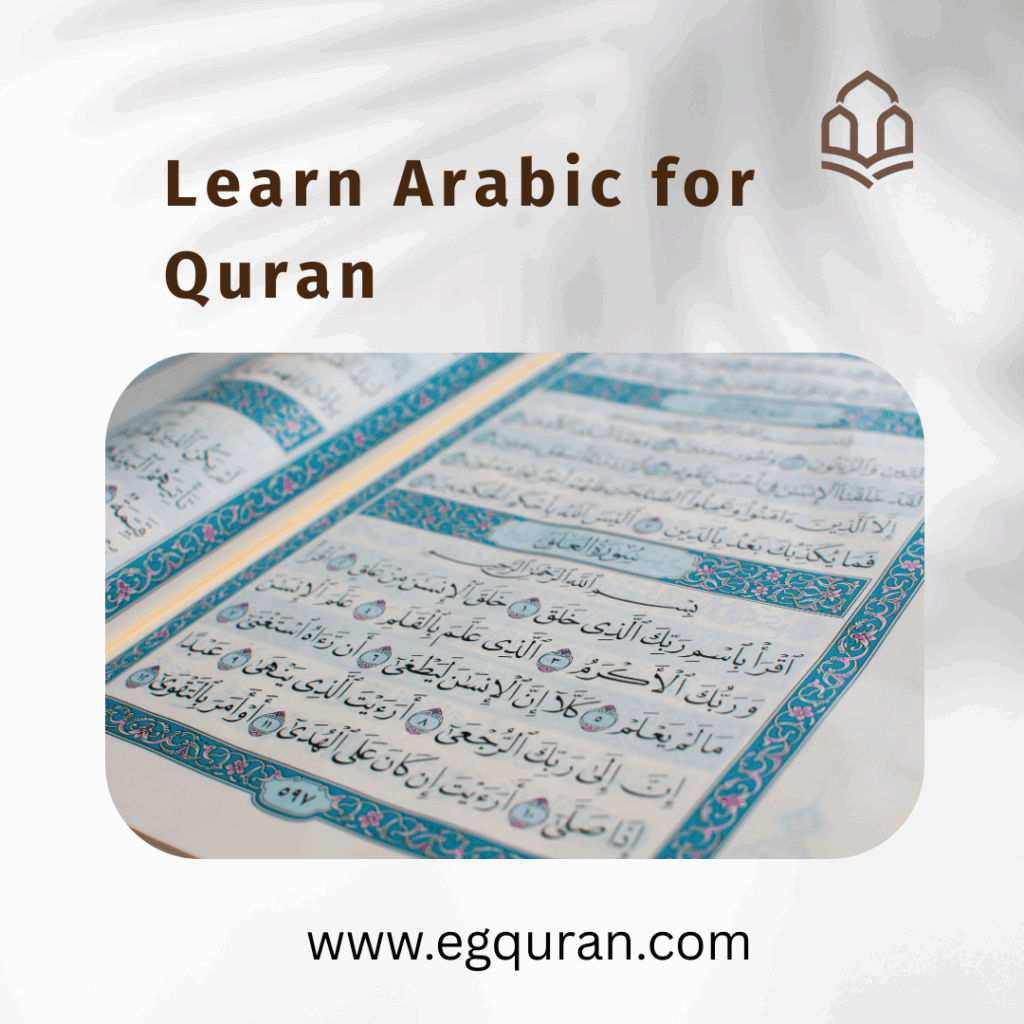
Here’s how beginners can start their journey to learn Arabic for Quran:
1. Start with the Arabic Alphabet and Pronunciation
- Learn how each letter is pronounced and written.
- Focus on makharij and sifaat (articulation points and characteristics of letters).
2. Study Basic Grammar (Nahw) and Morphology (Sarf)
- Understand sentence structure, verb patterns, and noun forms.
- These tools help you comprehend Quranic Arabic easily.
3. Learn Quranic Vocabulary
- Begin with common words used frequently in the Quran.
- Use vocabulary cards, apps, or Quranic word lists.
4. Use the Quran as Your Textbook
- Read simple surahs and reflect on their meaning.
- Try to identify grammar rules and word roots.
5. Take Online Arabic Courses for Qur’an Learners
- Enroll in structured programs that focus on Arabic for Quranic understanding.
- Look for certified teachers or institutes with a Quran-focused curriculum.
Arabic Is the Bridge to a Stronger Quranic Connection
When you learn Arabic for Quran understanding, you’re not just learning a language, you’re building a deeper connection with the words of Allah. Every new word you understand brings you closer to the message, increases your focus in prayer, and enriches your spiritual journey. Start with small steps, stay consistent, and let the language of the Quran transform your heart and mind.
Tips for Staying Motivated
- Set a daily time to revise and practice.
- Pair with a study partner or join a learning group.
- Make du‘a regularly and ask Allah for understanding.
Final Thoughts
Learn Arabic for Quran is one of the best investments you can make in your faith. It opens your heart to the message of Allah, improves your recitation, and brings life to your prayers. Whether you’re a student or a teacher, taking this step will transform your relationship with the Book of Allah.
Join our online Arabic classes tailored for Quran learners. Register now